央视曝光活鱼运输乱象:麻醉剂泛滥、工业酒精入水,食品安全隐患几何?

央视《财经调查》历时两月跨省调查发现,活鱼长途运输中普遍使用丁香酚、MS-222等未经审批麻醉剂,部分商贩甚至用含剧毒甲醇的工业酒精勾兑麻药。相关物质尚无安全评价,检测体系存在明显漏洞。国家市场监督管理总局已介入核查处置。
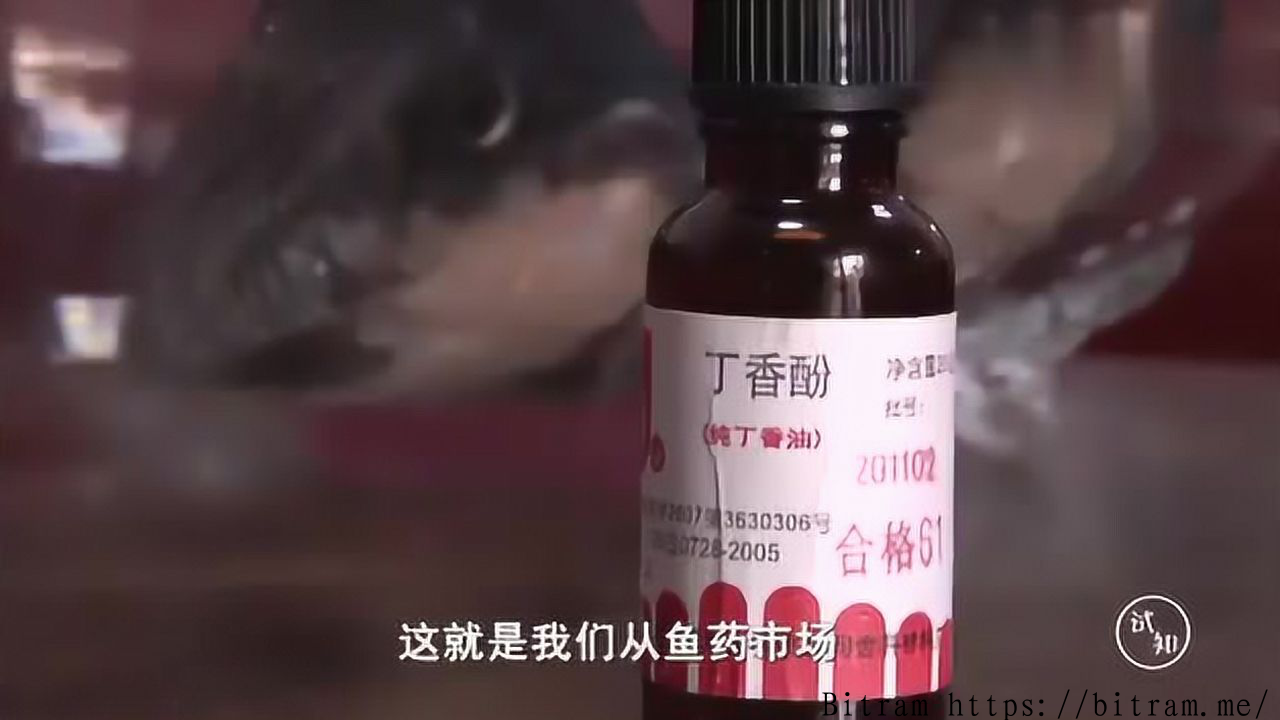
活鱼抵达市场后,安静得像一池死鱼,充氧不到一小时又活蹦乱跳——这背后,藏着一条贯穿多个省份的活鱼麻醉剂灰色产业链。央视《财经调查》栏目历时两个多月,深入重庆、山东、安徽、江西等地水产市场与生产企业,揭开了活鱼从养殖到餐桌之间一个鲜为人知的食品安全隐患。
麻醉剂泛滥:从"三无产品"到工业酒精
记者调查发现,在活鱼长途运输环节,使用麻醉剂已近乎行业"潜规则"。商贩的理由听起来颇为务实:减少鱼在运输途中的应激反应、防止掉鳞,方便装卸。然而,他们使用的产品,却触目惊心。
市场上流通最广的是以丁香酚为主要成分的"晕鱼王""鱼安宝"等产品,普遍是无生产日期、无生产厂家、无生产许可证的"三无"产品。江西一家厂商坦承,原料从印尼进口,以食品添加剂名义出货,实际上被鱼贩用于麻醉活鱼。医学研究表明,长期大量接触丁香酚可能损伤肝肾,孕妇和儿童尤需警惕,且不能与抗凝药、镇静剂同用。更关键的是,丁香酚在鱼体内完全代谢至少需要48小时,而这段时间窗口,鱼很可能已经上了餐桌。
情况更严重的是山东临沂和安徽宿州的市场。记者发现,当地商贩直接使用工业酒精勾兑麻醉剂——原因在于丁香酚不溶于水,工业酒精是最廉价的溶剂。然而,工业酒精含有剧毒甲醇,直接摄入可致失明、器官损伤,过量则可危及生命,国家明令禁止其进入食品加工环节。更荒诞的是,现场还发现用于盛装工业酒精的,竟是一只原本装沥青的蓝色塑料桶。
在宿州市场,另一种名为 MS-222(甲盐)的麻醉剂同样被使用。这种白色结晶粉末在国内同样未获批准用于食用活鱼。
监管漏洞:既不允许,也未禁止,更未检测
此次调查最令人担忧的,恰恰不是个别商贩的违规行为,而是制度层面的集体缺位。
- 丁香酚和 MS-222 均未进入水产养殖允许使用药物名单,但也不在明令禁用名单之列,处于法律灰色地带;
- 两种物质迄今未经国家安全评价,无使用剂量规定,无残留限量标准;
- 多地市场抽检体系中,丁香酚不在检测范围内,等于监管形同虚设;
- 商贩凭"手感"添加麻药,几瓶盖液体即可麻醉一池数千斤鱼,剂量完全失控。
市场管理方口头表示"禁止使用麻药",但对露天摆放的工业酒精和大桶勾兑麻药视而不见,执行力度与声明之间落差悬殊。
监管部门介入,但长效机制仍待建立
目前,《财经调查》节目组已将完整调查取证材料移交国家市场监督管理总局,后者联合重庆、山东临沂两地市场监管部门同步启动核查处置。这一回应速度值得肯定,但更深层的问题在于:一次曝光能解决的是个案,真正需要的是将鱼用麻醉剂纳入强制检测体系、明确法律定性、补上标准空白。
活鱼运输麻醉剂乱象的本质,是监管标准长期滞后于行业实践的缩影。 消费者在市场上挑选的那条"鲜活"的鱼,究竟经历了什么,答案不应继续模糊下去。
CCTV Exposes Live Fish Sedation Scandal: Industrial Alcohol and Unlicensed Anesthetics Found in Supply Chain
Live fish arrive at the market lying motionless like dead fish, only to swim freely again after less than an hour of oxygenation. Behind this phenomenon lies a shadowy supply chain of fish anesthetics spanning multiple provinces. A CCTV investigative program spent over two months conducting undercover reporting in aquatic markets, production facilities, and restaurants across Chongqing, Shandong, Anhui, and Jiangxi — uncovering a largely hidden food safety risk buried deep within the live fish supply chain.
Anesthetics Run Rampant: From Unlicensed Products to Industrial Alcohol
The investigation found that using anesthetics during long-distance live fish transport has become something close to an industry norm. Vendors justify the practice on practical grounds — reducing stress responses in fish, preventing scale loss, and making loading and unloading easier. But the products they use tell a far more troubling story.
The most widely used substances are products such as "Yunyu Wang" and "Yu Anbao," which are primarily composed of eugenol and are overwhelmingly sold without production dates, manufacturer information, or production licenses — so-called "three-no" products. A factory in Jiangxi admitted that raw materials are imported from Indonesia, shipped out under the label of food additives, and then used by fish traders to sedate live fish. Medical literature indicates that prolonged and heavy exposure to eugenol may cause liver and kidney damage, with pregnant women and children advised to exercise particular caution. Critically, eugenol requires at least 48 hours to fully metabolize in a fish's body — a window during which the fish may well have already reached the dinner table.
The situation is even more alarming in markets in Linyi, Shandong, and Suzhou, Anhui. Vendors there were found mixing anesthetics directly with industrial alcohol — the cheapest available solvent for eugenol, which does not dissolve in water. Industrial alcohol, however, contains the highly toxic substance methanol. Direct ingestion can cause blindness and organ damage, and excessive amounts can be fatal. Its use in any stage of food processing is explicitly prohibited by Chinese law. Adding to the absurdity, the industrial alcohol on site was stored in a blue plastic barrel that had previously been used for asphalt.
In the Suzhou market, another anesthetic known as MS-222 — chemically, ethyl 3-aminobenzoate methanesulfonate — was also in use. This white crystalline powder has similarly not been approved in China for use on live fish intended for human consumption.
Regulatory Gaps: Not Permitted, Not Banned, Not Tested
What makes this investigation particularly alarming is not the misconduct of individual vendors, but rather a systemic failure at the institutional level.
- Both eugenol and MS-222 are not on the list of approved substances for aquaculture use, yet neither appears on any official banned substance list — leaving them in a legal gray zone;
- Neither substance has undergone a national safety assessment, with no established dosage guidelines or residue limits;
- In market inspection programs across multiple regions, eugenol is not included in routine testing, rendering oversight effectively nonexistent;
- Vendors add anesthetics entirely by feel, with just a few capfuls capable of sedating thousands of kilograms of fish in a single tank — with no dosage control whatsoever.
Market administrators verbally insist that anesthetic use is "prohibited," yet openly ignore barrels of industrial alcohol and pre-mixed anesthetic solutions sitting in plain sight. The gap between stated policy and actual enforcement could hardly be wider.
Authorities Respond, but Systemic Reform Remains Overdue
The CCTV investigative team has handed over its full body of evidence to the State Administration for Market Regulation (SAMR), which has since launched coordinated investigations with market regulators in Chongqing and Linyi, Shandong. The speed of this response is commendable — but a single exposé can only address individual cases. What is truly needed is the mandatory inclusion of fish anesthetics in routine testing frameworks, clear legal classification of these substances, and the filling of long-standing regulatory gaps.
The chaos surrounding live fish transport anesthetics is, at its core, a reflection of regulatory standards that have chronically lagged behind industry practice. What exactly happens to that "fresh and lively" fish a consumer picks out at the market deserves a clear and unambiguous answer — and it deserves one now.
发表评论