全美超900万人走上街头:反特朗普抗议创历史新高,伊朗战争与移民政策成导火索

2025年3月28日,美国爆发史上最大规模"不要国王"抗议活动,全美50州超900万人参与3100余场集会,抗议矛头指向特朗普政府的伊朗战争决策、移民执法政策及通货膨胀问题。值得关注的是,逾半数抗议活动发生在共和党倾向州及郊区,显示民间不满情绪已突破党派界限。
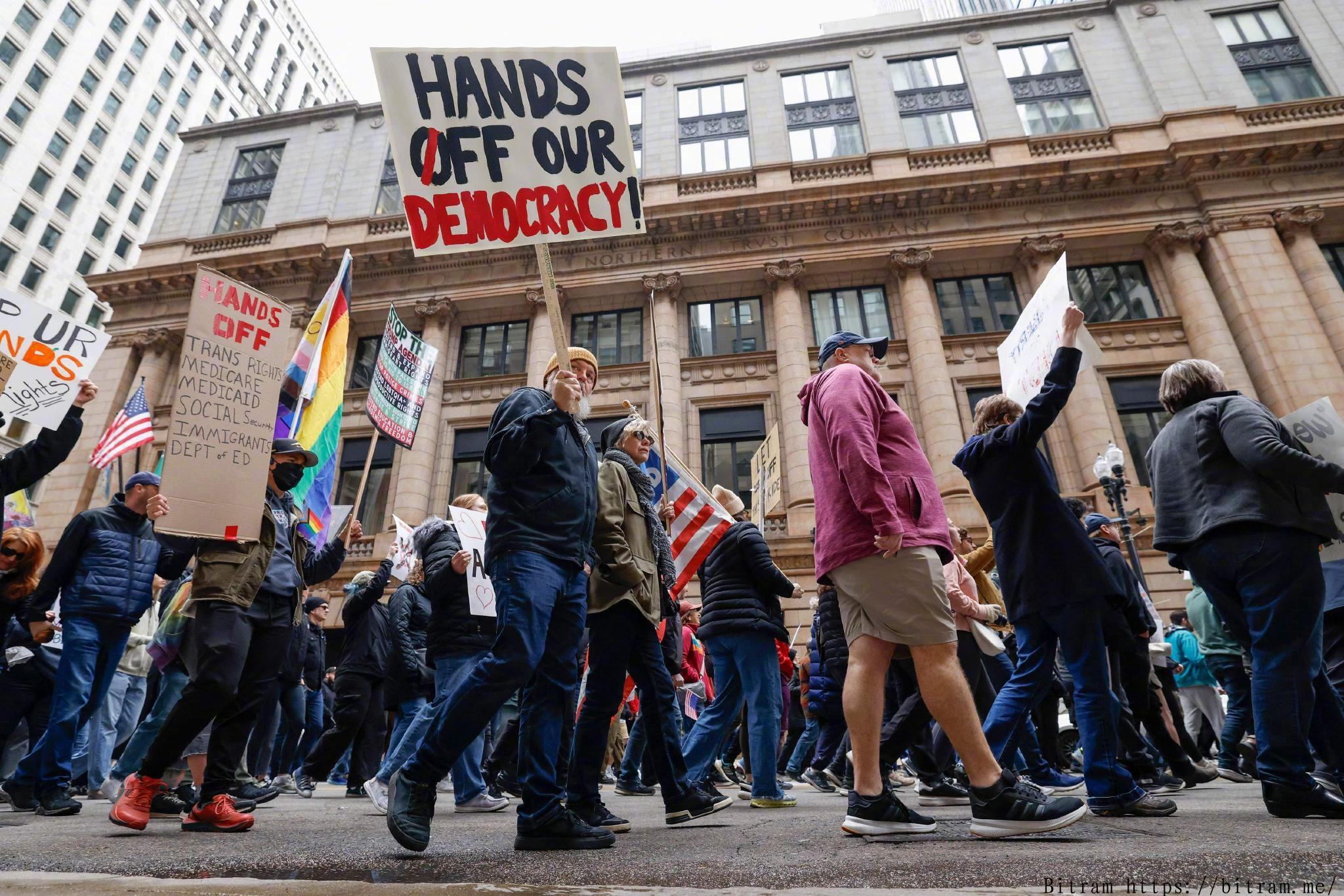
2025年3月28日,一场被称为"不要国王"(No Kings)的全国性抗议浪潮席卷美国,全国50个州超过900万人参与了逾3100场集会活动,这一规模极有可能创下美国历史上单日抗议人数之最。抗议浪潮的核心诉求,指向特朗普政府对伊朗的军事行动、争议性的移民执法政策,以及令普通民众感受真切的通货膨胀与生活成本压力。
持续约一个月的美以对伊军事行动,成为此轮民间怒火的重要引爆点。一名参与抗议的民众直言,这场与伊朗的冲突"本来没有必要发生",而政府的一系列举措已触碰法律红线。移民问题同样刺痛人心——本次主会场选在明尼苏达州圣保罗市,正是因为今年1月一场大规模移民搜捕行动在此导致两名美国公民死亡,这一事件至今仍是挥之不去的伤痕。
抗议版图正在悄然改变
此轮抗议最值得深思的,不是数字本身,而是参与者的构成正在发生根本性变化。主办团体"不可分割"(Indivisible)的数据显示:
- 超过50%的抗议活动发生在共和党倾向州或两党势均力敌的地区
- 约三分之二的参与者来自主要城市中心以外的乡村与郊区
- 爱达荷、怀俄明、蒙大拿等深红州均出现集会活动
- 宾夕法尼亚、佐治亚、亚利桑那等关键摇摆州的郊区参与度显著上升
这意味着,反对声浪早已不再是民主党票仓或大城市自由派的"专属情绪"。正如主办方所言,特朗普政府的施政已跨越党派边界,触动了全国各地、不同政治光谱的普通选民。
从街头到全球,不满情绪溢出国境
"数百万人来自各行各业,从乡村到大城市,正站出来发声。这个国家不属于国王、独裁者或暴君,而是属于我们。"
—— MoveOn执行董事 凯蒂·贝瑟尔
"不要国王"系列抗议从去年6月的500万人,到10月的700万人,再到本次超过900万人,三轮集会规模持续攀升,折射出民间积怨的不断加深。此次抗议活动还蔓延至欧洲、拉丁美洲和澳大利亚等十余个国家,显示出国际社会对美国当前政治走向的广泛关注与忧虑。
一次民调结果或许能为这场抗议提供背景注脚:多数美国登记选民对特朗普政府在移民、伊朗、通胀和生活成本四大议题上的表现均持负面评价。当政策失望感从城市蔓延至乡村、从蓝州渗入红州,街头的愤怒便不再只是政治表演,而是一个值得执政者认真倾听的社会信号。
Over 9 Million Americans Take to the Streets: Historic Anti-Trump Protests Erupt Over Iran War and Immigration Crackdown
On March 28, 2025, a nationwide wave of demonstrations known as the "No Kings" protests swept across the United States. More than 9 million people participated in over 3,100 rallies spanning all 50 states, a turnout that could mark the largest single-day protest mobilization in American history. At the heart of the movement: widespread opposition to the Trump administration's military campaign against Iran, its aggressive immigration enforcement, and the mounting pressures of inflation and cost of living that ordinary Americans feel every day.
The ongoing U.S.-Israeli military operations against Iran — now entering their second month — have served as a major catalyst for public outrage. One protester summed up the mood bluntly, saying the conflict with Iran "never needed to happen" and that the administration had repeatedly overstepped legal boundaries. Immigration policy has cut just as deep. Organizers chose Saint Paul, Minnesota as the rally's national hub — a deliberate reference to a large-scale immigration raid carried out there in January, which resulted in the deaths of two American citizens, a wound that has never fully healed.
A Protest Movement That's Changing Shape
What makes this round of demonstrations particularly significant is not the raw numbers, but the shifting profile of who is showing up. Data from lead organizing group Indivisible reveals a striking geographic transformation:
- Over 50% of events took place in Republican-leaning or competitive states
- Nearly two-thirds of participants came from outside major urban centers — from rural and suburban communities
- Rallies were held in deeply conservative states including Idaho, Wyoming, Montana, and Utah
- Suburban participation surged in key swing states like Pennsylvania, Georgia, and Arizona
This signals that dissatisfaction with the Trump administration has moved well beyond the Democratic base or liberal urban enclaves. As organizers put it, the administration's policies have crossed partisan lines, touching voters of all political backgrounds across the country.
From Main Street to the World Stage
"Millions of people from all walks of life — from rural communities to big cities — are standing up. This country does not belong to a king, a dictator, or a tyrant. It belongs to us."
— Katie Bethell, Executive Director of MoveOn
The "No Kings" series has grown with each iteration: roughly 5 million participants in June 2024, 7 million in October, and now more than 9 million in March 2025. That sustained escalation reflects a deepening well of public frustration. The movement has also gone international, with solidarity protests held in more than a dozen countries across Europe, Latin America, and Australia — a sign that concerns about the direction of American governance extend well beyond U.S. borders.
A recent national poll adds important context: a majority of registered American voters expressed dissatisfaction with the Trump administration's handling of immigration, Iran, inflation, and the cost of living. When policy frustration spreads from cities to small towns, and from blue states into red ones, the anger on the streets becomes more than political theater — it becomes a social signal that those in power would be wise to take seriously.
发表评论